
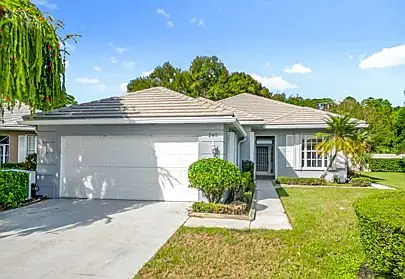
The Palm Beach County housing market has stopped behaving like a single market. A renovated house in a strong Boca Raton school zone, an older condo in Lake Worth Beach with a structural reserve study pending, and a tired three-bedroom in Riviera Beach that needs a roof are on completely different timelines. A countywide average tells you almost nothing useful about any one of them.
So this article does something unusual for a market update: it does not hand you a number we cannot attribute. Caliber Trust has been buying houses directly from Florida homeowners since 2016, and we would rather point you to the primary data and explain how to read it than round off a statistic to sound authoritative.
Pull the county numbers from the source, not from a headline
A few places carry the data that actually governs a Palm Beach County decision.
Florida Realtors publishes monthly single-family and townhouse-condo detail by county in its research and statistics section, including closed sales, median price, inventory, and months of supply. That is the report to quote when a buyer or an agent tells you what the market is doing.
The Palm Beach County Property Appraiser shows recorded sales, assessed and market values, exemptions, and legal descriptions parcel by parcel. For pricing a specific street, recorded comparable sales beat any statewide trend piece.
The Florida Office of Insurance Regulation posts rate filings and company data. In this county, insurance is a pricing input, not a footnote.
When you see a percentage in a news story about Florida real estate, check whether it describes the state, the Miami metro, or the West Palm Beach–Boca Raton–Delray Beach metro specifically. Those tell different stories in the same month.
Supply usually moves before price does
In a slowing Palm Beach County market, the first thing to change is not the median price. It is the time a listing spends active, the ratio of price reductions to new listings, and the share of contracts that die during inspection or appraisal. Price is a lagging indicator because sellers hold out before they adjust.
If you are tracking conditions on a particular street, watch three things month to month in the Florida Realtors county report and in your own MLS search: how long active listings have been sitting, how many have cut price at least once, and whether new pending contracts are keeping pace with new listings. When those move together, the median follows a quarter or two later.
That lag is why a seller who priced to last spring’s comps in a softening market often ends up taking less than a seller who priced to this month’s pendings from the start.
Carrying costs are doing a lot of the negotiating
What separates Palm Beach County from a generic housing market is the cost of holding the asset.
Insurance. Wind coverage, a hurricane deductible expressed as a percentage of dwelling value, and roof age underwriting all sit between your buyer and their loan approval. A buyer with a bindable quote in hand closes. A buyer waiting on a quote for an aging roof frequently does not.
Property taxes. Under Florida’s Save Our Homes cap in Fla. Stat. § 193.155, a long-held homesteaded property’s assessed value can sit far below market value. Your tax bill is not your buyer’s tax bill. Non-homestead buyers, second-home buyers, and investors underwrite the reset number, and that reset is part of why an investor’s offer on your house is lower than you expect.
Deferred maintenance. Roof, electrical panel, and plumbing age drive both insurability and financing. In this county those items are priced, not overlooked.
The condo market is its own animal
Older coastal condos in Palm Beach County are trading on a different set of rules than single-family houses. Milestone inspection requirements and structural integrity reserve studies under Fla. Stat. § 718.112(2)(g) and § 553.899 have pushed associations to fund reserves they previously waived, and special assessments follow.
If you own in an older building near the coast, assume a serious buyer will ask for the milestone inspection report, the reserve study, the current budget, and the assessment schedule before making an offer. Having that packet ready shortens your marketing time more than staging does. Not having it is the most common reason a condo contract in this county falls apart.
Financing is the other constraint. If a building does not meet a lender’s project standards, the buyer pool narrows to cash, and cash prices differently.
What investors are underwriting here
For investors, Palm Beach County still has the fundamentals that made it attractive — population inflow, employment concentration along the coastal corridor, and constrained developable land between the ocean and the conservation areas. The math is simply tighter than it was during the pandemic run-up.
The disciplined underwriting we see right now does three things: it quotes insurance before the offer, not after; it uses the reset property tax figure rather than the seller’s current bill; and it builds hurricane deductible exposure into the reserve assumption. Deals that skip those steps look fine on a spreadsheet and lose money in the first year.
Off-market sourcing matters more when listed inventory is thin or overpriced. We source off-market Florida deals for investors through deals.zylow.net. The honest caveat: off-market does not automatically mean discounted. It means less competition and more diligence on you.
Seller decision: patient listing, or direct sale
For most Palm Beach County sellers with a clean, financeable house and time to wait, a well-priced listing with a good local agent produces the highest number. That is the plain truth, and we say it to homeowners who call us.
A direct cash sale is a different trade. You are exchanging price for certainty and speed: no showings, no repair credits, no appraisal, no financing contingency, and a closing date you pick. A cash offer is typically below what a patient retail listing would produce, because the buyer is absorbing the repairs, the carrying cost, and the resale risk. If the house needs a roof, if the tenant situation is complicated, if you have already moved out of state, or if you need a date you can plan around, that trade can be worth it. If none of those apply, list it.
You can see how we buy on what we do, read common questions on our FAQ, or contact us for a straight answer on whether a direct sale even makes sense for your property. If you already have a listing agent or an attorney, that is not a conflict — we work alongside both, and we would rather tell you to stay on the market than take a bad fit.
A short checklist before you decide
- Pull your parcel on the Property Appraiser site and read the most recent recorded sales on your street.
- Read the current Florida Realtors county report for your property type, not the statewide summary.
- Get an insurance quote on your own house at its current roof age.
- If it is a condo, assemble the milestone report, reserve study, and assessment schedule first.
- Then decide which you actually need more: the highest number, or a known closing date.
Questions about title, contracts, deed language, or anything else legal belong with a Florida real estate attorney who can look at your specific situation.