
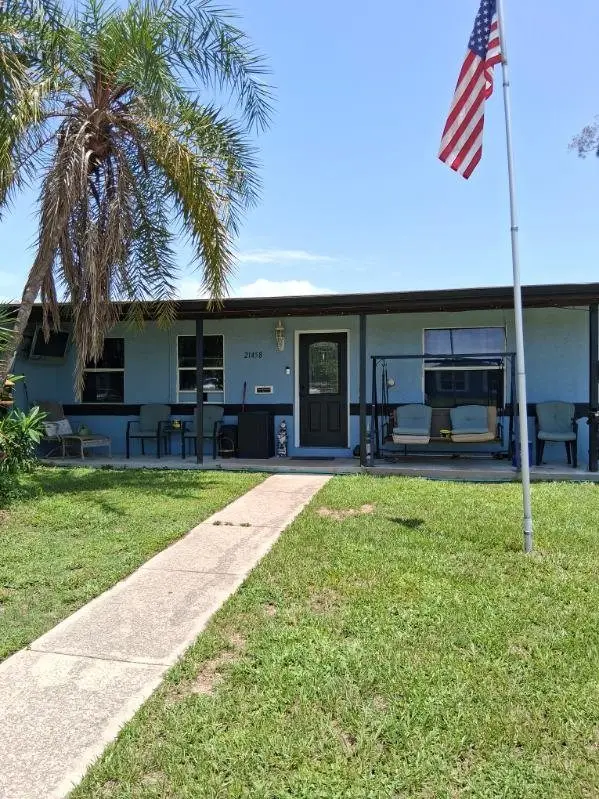
A buyer who looks at your house in Florida is no longer just pricing the house. They are pricing the roof, the electrical panel, the year the water heater was installed, and whatever quote a carrier hands them two weeks into the contract. That is the practical reality behind florida home insurance costs and selling: the premium is now part of the offer, and it shows up after the offer is already signed.
Most sellers find this out the hard way, during the inspection period, when a buyer comes back asking for a price reduction they did not ask for in the original negotiation.
Insurance shows up as a financing problem, not an insurance problem
A lender will not close a mortgage on a Florida house without a bound hazard policy. So when a carrier declines the risk, or comes back with a number far above what the buyer budgeted, the buyer’s debt-to-income ratio moves. Sometimes it moves enough to kill the approval.
That is happening in a market that already has very little momentum to spare. Mortgage News Daily, summarizing the National Association of Realtors’ September data, reported existing-home sales ticked up 1.5% to an annualized pace of roughly 3.99 million homes — and noted that August and September were the two slowest months of the year. Read their write-up here.
When volume is that flat nationally, a Florida-specific friction like insurance does not get absorbed quietly. It comes straight off the price.
It also pushes some would-be buyers out of purchasing entirely. Zillow Research’s September 2026 rent report described shoppers choosing to rent as elevated borrowing costs raise the monthly payment — which, in Florida, means the payment plus a premium that can rival a property tax bill. Fewer buyers in the pool means less competition for your listing.
Underwriters price your specific house, not your ZIP code
Florida carriers have narrowed what they will write. The practical result is that two nearly identical houses on the same street can get very different quotes, based on documentation most sellers have never collected.
The items that move the number most:
Roof age and material. Many carriers set hard cutoffs for shingle roofs and look at remaining useful life rather than condition alone. A roof that passes a home inspection can still fail an insurance underwriter’s age rule.
The four-point inspection. Roof, electrical, plumbing, HVAC. Older panels, polybutylene supply lines, and cast iron drains are common Florida reasons a quote comes back high or does not come back at all.
Wind mitigation features. Florida law provides for a uniform mitigation verification inspection form under Fla. Stat. § 627.711, and credits tied to things like roof-to-wall attachment, roof deck nailing, and opening protection. A current wind mitigation report in the listing file can change a buyer’s quote materially — and most sellers never order one.
Flood. Flood is a separate policy, and Florida’s residential flood disclosure requirement under Fla. Stat. § 689.302 means sellers now put prior flood damage and claims in writing at contract. Buyers read it. Assume they will.
None of this is advice about your specific policy or claim history. An insurance agent licensed in Florida — and, for anything contractual, a Florida attorney — is who should answer those questions for your property.
Condos and HOA properties carry a second layer
Condo sellers are dealing with insurance plus structure. Florida’s milestone inspection requirement under Fla. Stat. § 553.899 and the structural integrity reserve study requirement in Fla. Stat. § 718.112 have pushed associations toward funded reserves and, in some buildings, special assessments.
A buyer evaluating a condo is now underwriting the association’s master policy and its reserve position alongside their own unit coverage. Pending assessments get negotiated into the price, or they end the contract. If your building has an open milestone report or a reserve study with a large number attached, expect it to be the central topic of your sale, not a footnote.
What this does to pricing and timelines
Three patterns show up repeatedly in Florida sales right now.
Re-trades after the inspection period. The buyer gets a quote, brings it back, and asks for a credit. Sellers who priced to the top of the comps have the least room to absorb it.
Longer days on market for older-roof houses. A 2003 roof in a coastal county screens out a whole tier of buyers before a showing ever happens.
A widening gap between “insurable” and “as-is” pricing. Houses that can be insured conventionally trade near the comps. Houses that cannot increasingly trade to cash buyers and investors at a discount that reflects the roof, the panel, and the plumbing.
Financing conditions are not helping. Mortgage News Daily reported that the Mortgage Bankers Association expects 2027 origination volume to come in 5 percent below 2026 and below $2 trillion. A thinner lending market is not a market that stretches to accommodate a surprise premium.
What a seller can actually control
You cannot control the carrier market. You can control what the buyer learns and when.
- Order a wind mitigation inspection before listing. If it produces credits, that is a selling document.
- Get a four-point done early if the house is older. You would rather find the cast iron yourself than have a buyer find it on day nine of a fifteen-day inspection period.
- Collect roof documentation. Permit, install date, invoice, any repair records.
- Ask your current carrier what a new buyer would face. Some policies are assumable in limited circumstances; most are not, but it is worth knowing.
- Price with the insurance reality included. A list price built on comps for houses with new roofs, applied to a house with an old one, is a price reduction scheduled for six weeks from now.
If you are working with a listing agent, this is exactly the kind of prep work they are good at. Nothing here replaces them.
When selling as-is for cash is worth considering — and when it isn’t
Some Florida houses are hard to insure at any reasonable number right now, and the repair bill to change that runs well past what the seller can or wants to spend. In those cases a direct cash sale to a buyer who takes the house as-is can be the cleaner path: no financing contingency, no carrier declining the risk two days before closing, no re-trade.
The honest tradeoff is price. A cash as-is offer is generally lower than what a patient retail listing would bring on a well-maintained, easily insured house. A buyer paying cash is absorbing the roof, the plumbing, and the insurance problem, and the price reflects that. If your house is insurable and you can wait for the right buyer, listing it usually nets more money.
Caliber Trust has bought Florida houses directly since 2016, and what we do is straightforward enough to evaluate against a listing: get a real number, compare it to a net sheet from an agent, and choose. If you want to see how the other side of the trade prices these houses, investors source off-market Florida properties through deals.zylow.net.
For sellers still deciding, the FAQ covers how the as-is process works, and you can reach us directly with the address and the roof year — those two facts answer most of the question.